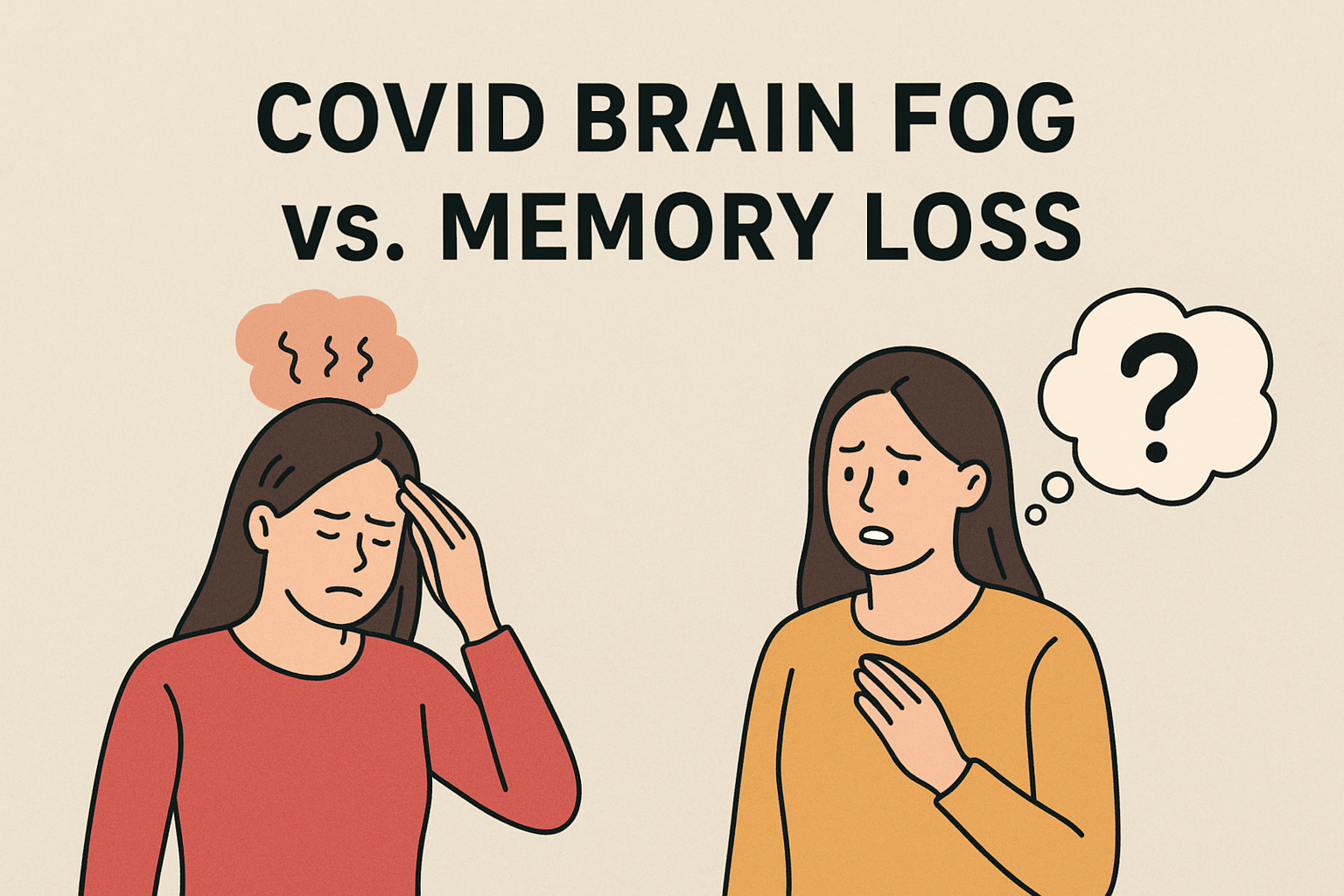
If you’ve had COVID, you may have felt it – that frustrating mental haze where words don’t come easily, focus drifts, and everything feels… foggy. Many call it “brain fog,” but some people worry it might be something more serious, like actual memory loss. At first glance, the two might sound similar. After all, both involve difficulties with thinking and remembering. But medically, brain fog and memory loss are very different things, and understanding the difference can shape how you manage your health and recovery.
In conversations with long COVID patients, one theme comes up often: “I feel like I’m not myself anymore.” That sentiment reflects more than just a list of symptoms – it’s about how these cognitive struggles impact identity, confidence, and daily life. So let’s unpack the science of covid brain fog vs memory loss, blending what we know from neurology with real human experiences.
What Brain Fog Feels Like
Brain fog isn’t a medical diagnosis – it’s a term people use to describe slowed thinking, fuzzy concentration, and the inability to “clear your head.” For many long COVID patients, it feels like trying to think through mud. Tasks that were once effortless – like reading an email, recalling a word, or following a conversation – become exhausting. Importantly, brain fog tends to fluctuate. You may wake up feeling sharp, only to hit a “mental wall” hours later.
Unlike memory loss, which can erase pieces of the past, brain fog usually affects processing speed and clarity in the moment. Imagine opening too many browser tabs – your computer doesn’t delete files, but it slows to a crawl. That’s what brain fog feels like for many.
Research suggests this fog may stem from lingering inflammation, disrupted blood flow, or even autoimmunity triggered by COVID (Yong, 2021). Patients often describe it less clinically: “It feels like my brain is wrapped in cotton.”
What Memory Loss Really Means
Memory loss is different. It’s not about mental slowness, but about gaps in recall. People with memory loss may forget events, conversations, or even skills they once had. This kind of loss is more stable and doesn’t fluctuate throughout the day like brain fog does. It’s also clinically recognized, often linked to conditions like dementia, traumatic brain injury, or stroke.
In the context of COVID, true memory loss is less common but still reported. Some patients develop symptoms resembling mild cognitive impairment, which worries doctors because it suggests deeper neurological effects. Whereas brain fog is like a dimmed lightbulb, memory loss is more like missing pieces of the bulb entirely. Neurologists emphasize that distinguishing covid brain fog vs memory loss is crucial: brain fog may improve with rest, pacing, and recovery, but persistent memory loss may require neurological evaluation, cognitive therapy, and closer medical monitoring.
The Science Behind Brain Fog in COVID
So why does COVID trigger brain fog in the first place? Scientists are still piecing together answers, but a few theories dominate. Studies show that the virus can cause neuroinflammation – immune system activity in the brain that disrupts normal communication between neurons. Even if the virus doesn’t directly invade brain cells, the body’s immune response can cause collateral damage.
Other research highlights problems with blood vessels. COVID is known to affect the endothelium (the lining of blood vessels), which can restrict blood flow to the brain. Less oxygen and nutrients mean slower thinking. Some evidence also suggests autoantibodies may play a role, essentially “short-circuiting” normal brain function (Douaud et al., 2022). Patients don’t always describe these processes in medical terms. They just know they can’t multitask like before, or they lose their train of thought mid-sentence. And that’s what makes brain fog feel so different from memory loss—it’s not erasure, it’s disruption.
How Memory Loss Shows Up After COVID
Memory loss linked to COVID often appears in a subtler, more insidious way. A person might forget why they entered a room, or completely blank on conversations they had yesterday. Unlike brain fog, this isn’t just about processing speed – it’s about missing data. Some researchers believe this is tied to the virus’s impact on the hippocampus, the brain’s memory hub. Imaging studies have shown shrinkage in this region in some COVID patients, suggesting that memory networks themselves can be affected (Douaud et al., 2022).
For patients, this can be frightening. Brain fog feels frustrating but temporary. Memory loss feels permanent and unsettling. A long COVID patient once put it this way: “Brain fog is like misplacing my keys. Memory loss is forgetting I own keys at all.” That distinction matters.
Why the Difference Matters for Treatment
Distinguishing covid brain fog vs memory loss isn’t just semantics – it shapes care. Brain fog may improve with pacing, cognitive rehabilitation, better sleep, and managing inflammation. Supplements like omega-3s or B vitamins are sometimes suggested, though evidence is still emerging. Memory loss, on the other hand, requires a different clinical pathway. Doctors may recommend neuropsychological testing, brain imaging, or referral to a neurologist. In some cases, persistent memory issues might even signal unrelated but co-existing conditions, like early-onset dementia, that COVID unmasked.
The danger is that patients who assume all brain issues are “just fog” may delay getting proper evaluation for more serious concerns. And patients who assume all forgetfulness is permanent “memory loss” may feel hopeless when, in reality, they’re dealing with reversible brain fog.
Living With Brain Fog and Memory Challenges
Beyond the science, the human experience of brain fog and memory loss is deeply emotional. People with long COVID often describe feeling dismissed—told by family, employers, or even doctors that “it’s just stress” or “in your head.” This invalidation adds another layer of suffering.
Support groups have become lifelines, giving patients spaces to share coping strategies. Many pace their activities, use notebooks or smartphone reminders, and lean on loved ones for backup memory. Small adaptations – like breaking tasks into steps or scheduling rest periods – can make fog more manageable. For those with memory issues, professional cognitive therapy and daily brain exercises (like puzzles or memory games) may help. But perhaps the most powerful tool is understanding that they’re not alone – and that distinguishing covid brain fog vs memory loss helps reclaim a sense of agency.
Steps You Can Take if You’re Struggling
If you’re dealing with cognitive symptoms after COVID, here are a few science-backed strategies:
- Track your symptoms: Note whether issues feel like “slowness” (fog) or actual gaps (memory).
- Protect your brain health: Get adequate sleep, manage stress, and eat a nutrient-rich diet.
- Stay physically active: Exercise boosts blood flow and brain resilience.
- Seek evaluation: If memory gaps persist, talk to a neurologist.
- Be patient with yourself: Recovery can be slow, but many long COVID patients report gradual improvement over time.
Clarity in the Confusion
Brain fog and memory loss may look similar on the surface, but they come from different roots and require different responses. By understanding the difference, patients can advocate for themselves, doctors can offer better care, and society can move toward validating the invisible struggles of long COVID. So, when someone asks about covid brain fog vs memory loss, the answer is: brain fog is a dimming, memory loss is a deletion. Both matter. Both deserve compassion. And both are part of a much larger story of how COVID continues to shape lives long after the acute infection fades.
References
- Yong, S. J. (2021). Long COVID or post-COVID-19 syndrome: putative pathophysiology, risk factors, and treatments. Infectious Diseases, PubMed.
- Douaud, G., et al. (2022). SARS-CoV-2 is associated with changes in brain structure in UK Biobank. Nature, Nature Link.
- Hampshire, A., et al. (2021). Cognitive deficits in people who have recovered from COVID-19. The Lancet eClinicalMedicine, The Lancet.
- Becker, J. H., et al. (2021). Neurologic sequelae of COVID-19. Journal of the Neurological Sciences, ScienceDirect.
- Davis, H. E., et al. (2021). Characterizing long COVID in an international cohort: 7 months of symptoms. EClinicalMedicine, The Lancet.