Mold thrives where there’s moisture, warmth, and poor airflow — all conditions common inside bedrooms. If left unchecked, mold can spread rapidly and impact indoor air quality, worsen allergies, or even trigger respiratory symptoms. The good news? You can both remove it quickly and reduce its return through a systematic approach.
This article breaks down exactly how to remove mold from a bedroom fast, safely, and effectively, based on public health guidance and indoor air quality best practices.
1. Understand What You’re Dealing With
Mold is a type of fungus that grows on surfaces with moisture. It produces microscopic spores that can become airborne and circulate throughout a room. Spores aren’t harmful in small amounts outdoors, but indoors they can accumulate and cause problems.
Mold isn’t just unsightly — it can degrade indoor air quality and contribute to symptoms like coughing, sinus irritation, headaches, or fatigue. Because mold growth is tied to moisture, it will come back if the underlying moisture issue isn’t addressed.
2. Safety First: Gear Up Before You Clean
Before you start removing mold, protect yourself and your environment:
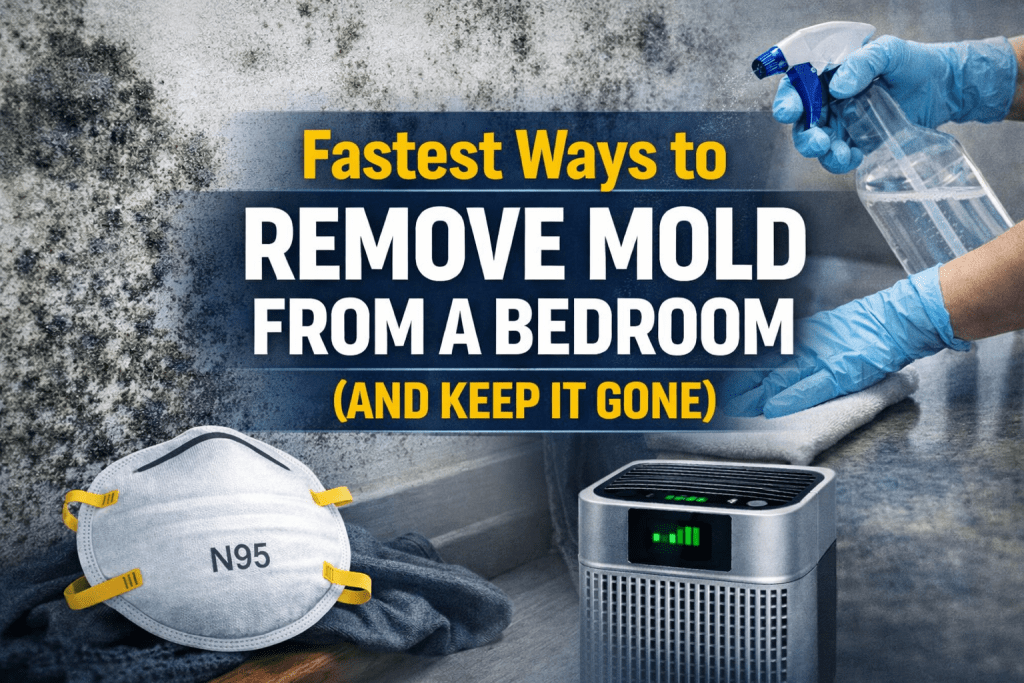
- Respirator mask (N95 or better) – to avoid inhaling spores
- Gloves – mold spores can irritate skin
- Goggles – prevent spores from hitting your eyes
- Disposable towels or paper rags – so you can throw contaminated materials away
Avoid dry brushing or sweeping — that simply kicks spores into the air.
3. Step-by-Step Mold Removal
Here is the quickest route to visible and measurable improvement.
Step A: Improve Ventilation
Before cleanup, open windows and doors to promote airflow. Even a fan pointed outward helps push spores outside instead of deeper into the house.
Step B: Fix Moisture Sources
Mold needs moisture. Fix leaks (pipes, roof, AC), use exhaust fans after showers, and make sure the room doesn’t stay humid. These fixes take time but prevent recurrence — you can’t out-clean moisture.
Step C: Surface Cleaning (Visible Mold)
Mold on non-porous surfaces (tiles, glass, wood trim) can often be cleaned directly:
- Spray the affected area with a cleaning solution — water mixed with mild detergent or white vinegar can help reduce mold stains.
- Let the cleaning agent sit for a few minutes.
- Wipe off with disposable towels.
- Throw used towels immediately in sealed bags.
➡️ Important: Bleach and harsh chemicals aren’t always recommended unless there’s a huge infestation — bleach may only kill surface visible mold and not address deeper mycelium or spores, especially on porous surfaces.
Step D: Contain and Clean the Air
While you clean surfaces, airborne spores will be circulating. Running a HEPA air purifier simultaneously captures spores from the air as you disturb mold, helping reduce the chance they resettle elsewhere.
A true HEPA filter captures very small particles (down to 0.3 microns) — this includes most mold spores in the air.
4. Reduce Humidity — The Key Long-Term Step
Mold loves moisture. Getting humidity below 50% in the bedroom dramatically slows mold growth.
How to manage humidity:
- Use a dehumidifier — maintain around 30–50% relative humidity
- Run the AC continuously instead of intermittently
- Open windows for cross ventilation when outdoor humidity is low
Humidity meters (hygrometers) are inexpensive and give real-time readings.
5. What Not to Do (Common Mistakes)
Even well-intended actions can backfire:
✅ Don’t scrub mold dry — this sprays spores everywhere.
✅ Don’t vacuum without HEPA — that just redistributes spores.
✅ Don’t ignore hidden sources — mold often hides behind furniture, under carpets, inside vents, and on damp walls.
6. How Fast Should You Expect Results?
With ventilation + surface cleaning + humidity control:
- Visible mold reduction: Same day
- Air quality improvement: within 24–48 hours
- Reduced recurrence risk: Day 3 onward if moisture stays controlled
Running a HEPA purifier during cleanup and afterward gives the fastest reduction in airborne spores.
7. When to Get Professional Help
DIY works for small patches (about <10 sq ft), but you should consult mold remediation pros if:
- Mold covers a large area
- You suspect hidden mold in walls or ceilings
- Health symptoms persist despite cleaning
- Moisture issues come from structural leaks
Professionals use containment, moisture meters, and industrial HEPA systems.
8. Keeping Mold Away for Good
This is the part people skip — and then mold returns.
Preventive checklist:
✔ Keep indoor humidity ~30–50%
✔ Run HEPA air cleaner especially during high humidity months
✔ Ventilate bathrooms and kitchens
✔ Fix leaks immediately
✔ Check behind furniture against exterior walls during rainy seasons
Once humidity is controlled and air circulation improved, mold spores lose their ability to settle and grow.
Summary
Cleaning mold isn’t just about wiping walls — it’s about controlling the environment that caused it. By:
- Removing visible mold safely
- Using HEPA air cleaning
- Reducing moisture and humidity
- Ventilating continuously
you get rapid removal today and lasting prevention tomorrow.
References (Credible Sources)
- U.S. Environmental Protection Agency (EPA) – Mold basics and control: https://www.epa.gov/mold
- EPA guide on cleaning surfaces, moisture control, and indoor air best practices: https://www.epa.gov/air-quality/indoor-air-quality
- CDC mold cleanup and exposure prevention resources: https://www.cdc.gov/mold-health/communication-resources/index.html
- EPA guide to home air cleaners: https://www.epa.gov/indoor-air-quality-iaq/guide-air-cleaners-home