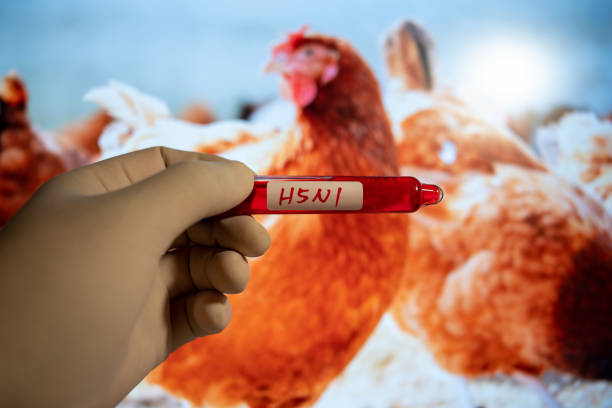
When Washington State confirmed the first known case of H5N5 in a human, it wasn’t just another headline — it was a quiet turning point in our understanding of how avian influenza is evolving in real time.
For many of us, the news arrived as a déjà vu moment: another bird flu strain, another mutation, another reminder that our world of humans and animals is deeply interconnected. But for the public health community, this confirmed case is more than a footnote — it’s a signal to look closer, act faster, and communicate clearly.
This article breaks down what happened, why scientists are paying attention, and what you can realistically do today to protect yourself and your family.
A Human Story Behind the First H5N5 Case
The first patient infected with H5N5 was an older adult in Grays Harbor County, Washington. They had underlying health conditions and were hospitalized in early November 2024 after developing serious symptoms — including fever, respiratory distress, and confusion.
Health investigators later confirmed the most likely exposure: the patient had close contact with sick or dead birds, a known high-risk scenario for avian influenza. There is no evidence of human-to-human transmission, but the severity of the illness shows that cross-species spillover is never trivial.
The patient remains hospitalized. Officials are staying cautious because the virus showed genetic features that deserve attention, even though the risk to the general public is still considered low.
Why This Case Matters More Than Previous Bird Flu Events
We’ve seen H5N1 and H5N2 affect humans before, so why is the H5N5 first human infection different?
The answer lies in three areas:
- The virus resembled highly pathogenic avian flu strains.
- Sequencing identified mutations that change how the virus behaves.
- It highlights a shifting landscape of avian flu evolution.
Let’s break these down in a clear, precise way.
1. H5N5 Has Become More Widespread in Wild Birds
Just a few years ago, H5N5 detections were occasional. But recently, wildlife surveillance found it in:
- ducks
- shorebirds
- backyard flocks
- raptors
When viruses circulate widely in wild birds, they have more opportunities to mix, reassort, and evolve.
2. Sequencing Revealed Mutations That Make Spillover Possible
The Washington Department of Health and USDA sequencing identified genetic markers linked to mammalian adaptation. These include:
Mutations in the HA (hemagglutinin) gene
These can alter how easily the virus binds to receptors in the human respiratory tract. Certain changes in receptor-binding sites suggest an increased ability for the virus to attach to human airway cells, even if only minimally.
Internal gene segment compatibility
H5N5 appears to have swapped internal genes with other Eurasian-origin avian flu viruses. This “gene reassortment” can:
- increase viral replication efficiency
- improve stability in mammalian cells
- change disease severity
Markers associated with increased virulence
Some internal gene mutations (particularly in PB2 and PA segments) are known to enhance severity in animal models.
→ This DOES NOT mean the virus is adapted to humans
→ But it DOES mean scientists are right to treat this with seriousness and transparency
These mutations help explain why this particular patient developed a significant infection instead of clearing the virus rapidly.
3. It Shows That Even Rare Strains Can Jump Species
H5N5 was not previously considered a front-runner for spillover. The fact that it managed to infect — and severely sicken — a human means:
- we need to monitor it more closely
- spillover risks increase with environmental and agricultural pressures
- rare does not mean impossible
- and pandemics often start with a “rare” event becoming less rare over time
This case is a reminder that early detection and communication matter.
What Symptoms Did the H5N5 Patient Experience?
While each individual may vary, officials reported symptoms typical of severe avian influenza:
- High fever
- Severe respiratory distress / breathing difficulty
- Cough
- Fatigue and weakness
- Confusion or altered mental state
- Possible neurological involvement
The seriousness of the symptoms reinforces that avian flu infections are not mild, even when they do not spread between people.
Is H5N5 Spreading Between People?
No.
There is zero evidence of human-to-human transmission. No close contacts tested positive. No secondary cases emerged. However, the presence of mammalian-adaptation markers means:
- the virus is capable of infecting mammals
- this single spillover event shouldn’t be ignored
- respiratory protection (masks) remains an effective, low-effort precaution
How Masks Help Against Bird Flu Viruses like H5N5
Aviation flu spreads mainly through:
- droplets
- aerosols
- contaminated dust in bird environments
- particles from feathers and feces
N95 and KN95 masks reduce exposure to airborne viral particles significantly.
Masks are especially protective for:
- farmers
- poultry workers
- wildlife rescuers
- backyard flock owners
- people cleaning areas contaminated with bird droppings
- anyone living near waterfowl migration routes
Even for the general public, wearing a mask during outbreaks or around sick birds is a simple and highly effective protective measure.
How You Can Protect Yourself Right Now
1. Avoid touching sick or dead birds
Report them to local wildlife or agricultural departments.
2. Keep pets away from wild birds
Cats and dogs can contract avian flu.
3. Wear an N95 mask
Especially if you must clean up droppings, feathers, or contaminated bedding.
4. Wash hands thoroughly after outdoor activities
H5 viruses can survive on surfaces.
5. Cook poultry and eggs fully
Heat destroys avian influenza viruses.
6. Stay alert for symptoms after bird exposure
Seek medical care immediately if you develop fever or breathing difficulty.
Why Experts Are Taking a Serious — But Not Alarmist — Approach
Scientists are not downplaying the situation, nor are they predicting catastrophe. Instead, they are recognizing that:
- Spillover events are increasing
- H5N5 now joins a list of strains showing unexpected behavior
- Genetic mutations suggest the virus is evolving faster than surveillance systems
This is why:
- sequencing matters
- transparent reporting matters
- masking matters
- early response matters
Preparedness is not panic—it’s responsibility.
A Practical Look at the Current Risk Level
Right now:
Risk to the general public: Low
H5N5 does not circulate in people.
Risk to people exposed to sick or dead birds: Elevated
Masks and gloves are strongly recommended.
Risk of future adaptation: Unknown but concerning enough to monitor closely
Mutations don’t guarantee adaptation, but they raise the stakes enough that experts are paying attention.
Why This Moment Matters for Public Health
This case is a reminder that viruses evolve whether we watch them or not. Early spillover detection buys time, while masks and hygiene remain simple tools with big impact. Public communication must be clear, honest, and free of panic. The single greatest strength we have is information shared early, not after the fact.
References
Washington State Department of Health – Official announcement
https://doh.wa.gov/newsroom/h5n5-avian-influenza-confirmed-grays-harbor-county-resident
CDC Avian Influenza Updates
https://www.cdc.gov/flu/avianflu/
USDA APHIS Highly Pathogenic Avian Influenza Detections
https://www.aphis.usda.gov/aphis/ourfocus/animalhealth/animal-disease-information/avian-influenza
WHO Avian Influenza Situation Reports
https://www.who.int/emergencies/disease-outbreak-news
NBC Right Now – Washington H5N5 Case Coverage
https://www.nbcrightnow.com/lifestyles/health/washington-reports-first-human-case-of-rare-bird-flu-strain/article_6883184a-4397-5d0d-86e0-87e6b720a273.html