When Your Mind Doesn’t Feel Like Your Own
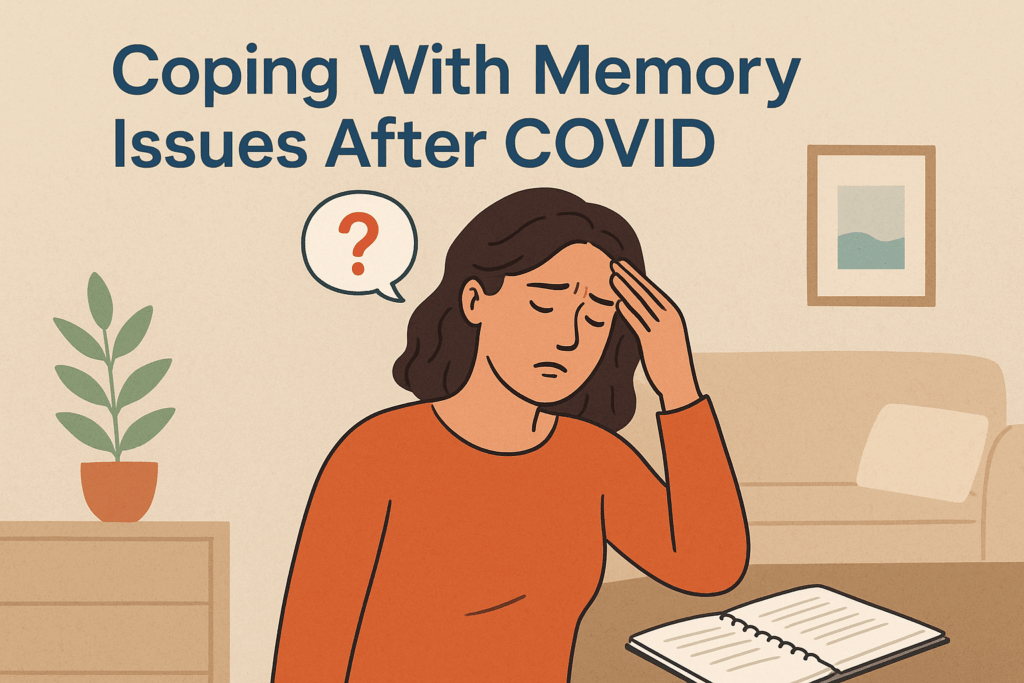
One of the most unsettling parts of recovering from COVID-19 isn’t always the cough or fatigue – it’s the foggy feeling that sneaks into your mind. Many people describe it as walking into a room and forgetting why you went there, losing track of words mid-sentence, or struggling to follow through on simple tasks. These memory issues after covid can feel scary, frustrating, and even isolating. But here’s the truth – you are far from alone. Scientists are studying this phenomenon, and it’s becoming clear that post-COVID brain fog is real and common. This isn’t a reflection of your intelligence or effort. It’s a symptom, like a headache or fever. And the good news? There are simple, practical strategies you can use each day to feel more in control and less overwhelmed.
You’re Not Forgetful, You’re Healing
First, let’s start with compassion. When memory slips happen, it’s easy to call yourself “forgetful” or “lazy.” But research shows that up to 30 to 35% of people experience cognitive symptoms after COVID. These can include difficulty concentrating, slower processing, and short-term memory glitches. That means you’re experiencing something countless others are also facing – it’s not personal weakness. What you’re going through has a biological explanation, possibly linked to inflammation or small changes in how your brain processes information. Giving yourself grace is not just a “feel-good” suggestion; it actually helps reduce stress, which is known to make memory problems worse. So the first coping tip isn’t a gadget or journal – it’s simply this: remember your brain is recovering. The fog doesn’t define you, and it doesn’t take away your resilience.
Write It Down, Don’t Hold It In (Journaling for Clarity)
When your brain feels slippery, writing things down can feel like giving it an extra hand to hold. Journaling doesn’t need to be long or poetic – bullet points and quick notes are enough. Try keeping a small notebook or using your phone’s notes app to jot down tasks, reminders, or even just what you did during the day. Studies show that the act of writing helps reinforce memory, almost like underlining a sentence in your mind. This simple tool not only helps you remember but also creates a comforting record you can revisit. On tough days, you can flip through past entries and remind yourself: “I am managing, even if it feels messy.” Think of your journal not as homework, but as a conversation with your future self – one who might need a little reminder that you’ve got this.
Set Timers, Save Brainpower
Ever found yourself burning tea because you forgot the kettle was on? Or sitting at your desk only to realize you missed your online meeting? That’s where timers and alarms come in – not as nagging devices, but as friendly nudges. Cognitive scientists often recommend “external aids,” tools outside your brain that share the load. Try setting phone alarms for medication, hydration, or transitions between activities. If screens overwhelm you, go analog with sticky notes or a kitchen timer. Breaking big tasks into smaller, timed steps also works wonders: for example, 10 minutes to fold laundry, then an alarm to remind you it’s time to take a break. Instead of trying to power through with sheer willpower, give yourself permission to lean on these aids. They don’t make you weaker – they make life gentler.
Track Medications Without the Stress Spiral
Few things are more frustrating than staring at a pill bottle wondering, “Did I take this already?” Medication tracking helps you avoid that anxious loop. Something as simple as a seven-day pill organizer or a paper checklist can save time and energy. If you prefer digital, there are free apps that let you check off doses and send you reminders. Taking a quick photo of your pillbox each night can also give you visual proof for peace of mind. Research shows that using reminders and routines greatly improves medication adherence, which means fewer health risks and less mental strain. Instead of holding all that responsibility in your memory, let the tools carry it for you. It’s not about being forgetful – it’s about being smart with your energy. Every time you cross “meds” off your list, it’s one less worry in your day.
Train Your Brain – Gently
Your brain, like a muscle, responds to gentle exercise. That doesn’t mean cramming Sudoku marathons until you’re exhausted, but sprinkling in light cognitive activities you enjoy. Post-COVID studies show cognitive rehab programs help improve memory, attention, and focus. You can mimic this at home with daily crosswords, memory card games, or apps designed for brain health. Even activities like learning a new recipe, practicing a few words in another language, or playing music count as mental workouts. The key is balance: challenge your mind just enough to engage it, but not so much that you feel drained. Think of it as a “brain stretch” instead of a “brain workout.” Over time, these small sessions can retrain your memory and build confidence that yes, your mind is still capable of growth and joy.
The Emotional Side of Brain Fog
Memory struggles don’t just disrupt tasks – they can take a toll on how you feel about yourself. Many people dealing with memory issues after covid report frustration, shame, or even fear: Will this ever get better? Emotional weight like this is real and deserves care. Talking about it can make a huge difference. Share honestly with loved ones: “I’m having a brain fog day, so I might need reminders.” Chances are, they’ll meet you with understanding, not judgment. Writing about feelings in your journal can also help separate memory lapses from self-worth. If you notice sadness or anxiety getting heavier, reaching out to a therapist or counselor can be healing. Emotional support doesn’t erase the fog, but it makes the journey less lonely – and sometimes, that’s exactly the clarity you need.
When to Seek Medical Support
Most people gradually recover from post-COVID memory issues, but if your symptoms are lasting or worsening, it’s worth talking to a doctor. Persistent brain fog could be linked to underlying issues like vitamin deficiencies, thyroid problems, or lingering inflammation. A healthcare professional can rule these out and may refer you to cognitive rehabilitation or occupational therapy tailored to your needs. It’s not about being dramatic – it’s about giving your brain every chance to heal. Bring along notes about your symptoms, patterns, and what coping tools you’ve tried. Doctors appreciate clear examples, and it helps them see the full picture. Remember, seeking help doesn’t mean you’ve failed – it means you’re actively taking charge of your recovery. Think of it as teaming up with a guide who knows the terrain, so you don’t have to walk the foggy path alone.
Your Toolbox for Brighter Days Ahead
Let’s gather the tools you can carry forward:
- Journaling: Capture thoughts, track patterns, lighten your memory load.
- Timers & Alarms: Break tasks into steps and reduce overwhelm.
- Medication Tracking: Use pillboxes, apps, or checklists for peace of mind.
- Cognitive Play: Try puzzles, games, or therapy to gently retrain your brain.
- Emotional Care: Share your struggles, seek support, and give yourself grace.
- Medical Guidance: Consult professionals if symptoms linger.
These aren’t just coping hacks – they’re acts of kindness to yourself. Each small step is progress, even if it feels slow. Healing isn’t about snapping back overnight; it’s about adapting and rebuilding with patience. Every time you lean on these strategies, you’re proving that the fog doesn’t control you. You’re learning to walk through it – and toward brighter, clearer days.
Finding Yourself Again
Living with memory issues after covid can feel like losing pieces of yourself – but those pieces aren’t gone forever. With patience, support, and practical strategies, you can reassemble your days in ways that feel manageable, even hopeful. Start small: set a timer, jot a note, track one habit. These tiny anchors can restore a sense of control and remind you that you’re healing. Celebrate each win, no matter how small – it’s proof that your brain is finding its way back. And if the fog lingers, remember: asking for help is not weakness, it’s wisdom. You are not alone in this, and you are not defined by what you forget. You are defined by the courage it takes to keep going. One step, one note, one reminder at a time – you will find your way through.
References
- Cognitive symptoms after COVID-19
Davis, H. E., Assaf, G. S., McCorkell, L., et al. (2021). Characterizing long COVID in an international cohort: 7 months of symptoms and their impact. EClinicalMedicine, 38, 101019.
https://www.ncbi.nlm.nih.gov/pmc/articles/PMC8293976/ - Neurological and psychiatric outcomes post-COVID
Taquet, M., Geddes, J. R., Husain, M., Luciano, S., & Harrison, P. J. (2021). 6-month neurological and psychiatric outcomes in 236,379 survivors of COVID-19. The Lancet Psychiatry, 8(5), 416–427.
https://www.thelancet.com/journals/lanpsy/article/PIIS2215-0366(21)00084-5/fulltext - Writing strengthens memory encoding
Mueller, P. A., & Oppenheimer, D. M. (2014). The pen is mightier than the keyboard: Advantages of longhand over laptop note taking. Psychological Science, 25(6), 1159–1168.
https://journals.sagepub.com/doi/10.1177/0956797614524581 - External aids in cognitive rehabilitation
Cicerone, K. D., Goldin, Y., Ganci, K., Rosenbaum, A., Wethe, J. V., Langenbahn, D. M., … & Trexler, L. E. (2019). Evidence-based cognitive rehabilitation: Systematic review of the literature from 2009 through 2014. Archives of Physical Medicine and Rehabilitation, 100(8), 1515–1533.
https://pubmed.ncbi.nlm.nih.gov/30606875/ - Medication adherence and reminders
Vrijens, B., De Geest, S., Hughes, D. A., et al. (2012). A new taxonomy for describing and defining adherence to medications. British Journal of Clinical Pharmacology, 73(5), 691–705.
https://www.ncbi.nlm.nih.gov/pmc/articles/PMC3403192/ - Cognitive rehabilitation and brain training
Petersen, M. S., Kristiansen, M. F., Hanusson, K. D., et al. (2022). Long COVID in the Faroe Islands: A longitudinal study among non-hospitalized patients. Clinical Infectious Diseases, 74(10), 1807–1813.
https://academic.oup.com/cid/article/74/10/1807/6359001 - Neuroinflammation and post-COVID cognitive effects
Huang, C., Huang, L., Wang, Y., et al. (2021). 6-month consequences of COVID-19 in patients discharged from hospital: a cohort study. The Lancet, 397(10270), 220–232.
https://www.thelancet.com/journals/lancet/article/PIIS0140-6736(20)32656-8/fulltext